
In modern manufacturing, production speed means nothing without consistency. A single hour of downtime in a packaging facility can delay shipments, waste raw materials, interrupt supply chains, and directly impact revenue. Whether it is a food processing unit, spice manufacturing plant, FMCG brand, or pharmaceutical facility, maintaining packaging equipment is no longer optional. It is a core operational requirement.
At Arceus India, one of the most common issues observed across production facilities is that many businesses only focus on machines when a breakdown occurs. In reality, preventive maintenance is what keeps packaging lines running smoothly, especially in high-volume environments where even minor inconsistencies can escalate into large-scale operational problems.
Understanding what is machine maintenance, why it matters, and implementing a proper packaging machine maintenance checklist can significantly improve machine lifespan, packaging accuracy, and production efficiency.
What Is Machine Maintenance?
To understand the importance of preventive care, businesses first need clarity on what is machine maintenance. Machine maintenance refers to the process of regularly inspecting, servicing, cleaning, repairing, and monitoring industrial machinery to ensure it operates efficiently without unexpected failures.
In packaging operations, maintenance is not limited to fixing broken parts. It involves maintaining sealing temperatures, checking pneumatic systems, calibrating sensors, monitoring motor performance, lubricating moving components, and ensuring the machine maintains consistent packaging quality during continuous operation.
Packaging machinery works under constant mechanical stress. High-speed operations, product dust, vibration, humidity, and continuous runtime gradually affect machine performance. Without proper maintenance routines, even advanced automatic packaging systems can begin showing problems such as inaccurate filling, improper sealing, film wastage, or unexpected shutdowns.
Why Machine Have to Be Maintained in Industrial Production
Many factory owners underestimate how quickly minor wear and tear can affect overall production. The question of why machine have to be maintained becomes especially important in industries where packaging accuracy directly impacts customer satisfaction and product quality.
For example, in spice or powder packaging environments, fine particles often accumulate around sealing units, sensors, and conveyors. Over time, this dust buildup affects machine precision and heat distribution. In snack packaging lines, continuous vibration and high-speed motion can loosen fittings or reduce alignment accuracy. These issues may appear small initially, but they gradually lead to machine stoppages, rejected products, and expensive repairs.
Regular maintenance helps identify these early warning signs before they become serious operational failures. Businesses that follow preventive maintenance schedules typically experience lower downtime, reduced repair costs, better packaging consistency, and longer machine lifespan.
Another important reason why machine have to be maintained is worker safety. Poorly maintained machines increase the risk of electrical failures, overheating, mechanical jams, and operator accidents. A properly serviced packaging machine not only protects production efficiency but also creates a safer working environment.
The Real Cost of Ignoring Packaging Machine Maintenance
One of the biggest misconceptions in manufacturing is that maintenance slows production. In reality, the opposite is true.
Facilities that delay servicing often experience sudden production halts during peak operational hours. Emergency repairs usually cost significantly more than planned maintenance because they involve urgent spare part replacement, technician downtime, production losses, and delayed order fulfilment.
A common situation observed in industrial packaging plants involves sealing failures caused by neglected heating elements. When seal temperatures become inconsistent, products may leak, lose freshness, or fail quality inspection. This creates not only material wastage but also reputational damage for the manufacturer.
At one stage, Arceus India worked with facilities where improper maintenance routines had reduced packaging speed efficiency by nearly 20 percent without operators immediately noticing the gradual decline. Once proper servicing schedules were implemented, production stability improved substantially along with material utilisation.
This is why a proactive packaging machine maintenance checklist is essential for businesses aiming to scale production reliably.
Daily Packaging Machine Maintenance Checklist
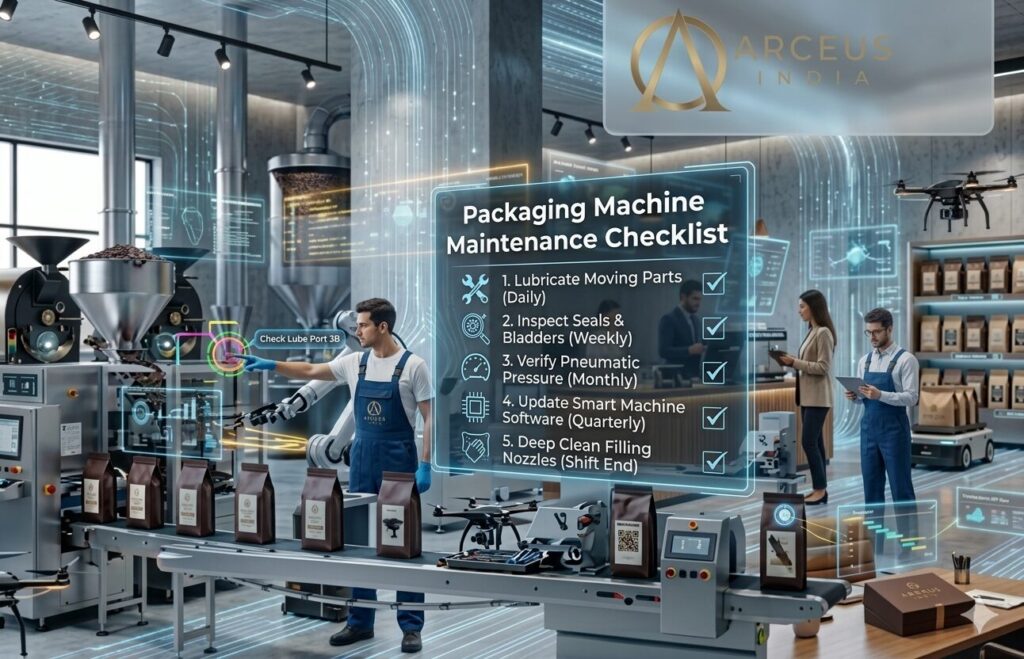
A strong packaging machine maintenance checklist begins with daily inspections. These checks are designed to identify operational inconsistencies before they affect production quality.
Operators should inspect sealing jaws, filling systems, film rollers, and conveyor movement before production starts. Dust, oil residue, or leftover product particles should be cleaned thoroughly because buildup often affects machine calibration and sealing consistency.
Temperature readings should also be verified regularly. Inconsistent heating is one of the earliest signs of potential sealing issues. Pneumatic pressure levels and air supply systems should remain stable throughout operations to avoid uneven packaging output.
Daily observation also includes listening to the machine itself. Experienced operators often detect unusual vibration, noise, or movement before visible failures occur. These small operational changes frequently indicate bearing wear, loose components, or motor strain.
The effectiveness of a packaging machine maintenance checklist often depends less on complexity and more on consistency.
Weekly and Monthly Preventive Maintenance Practices
While daily cleaning and inspection are essential, deeper servicing should be performed weekly and monthly depending on machine workload and production volume.
Weekly maintenance usually involves checking chain tension, belt alignment, lubrication points, sensor functionality, and electrical connections. Packaging lines operating in dusty environments require additional attention because airborne particles gradually interfere with electronic components.
Monthly maintenance focuses more on performance optimisation and wear analysis. Motors, bearings, heating systems, pneumatic cylinders, and control panels should be carefully evaluated for long-term reliability.
Businesses asking what is machine maintenance often assume it only involves mechanical repairs. However, modern packaging systems also rely heavily on software calibration, sensor communication, and automation settings. Even small sensor misalignments can reduce fill accuracy or create inconsistent pouch dimensions.
Facilities using automatic packaging systems should also monitor packaging material compatibility. Low-quality films or inconsistent packaging rolls can place additional strain on machine components and accelerate wear.
How Preventive Maintenance Improves Packaging Quality
Maintenance is not only about preventing breakdowns. It directly affects packaging quality, product consistency, and brand perception.
Improperly maintained machines often produce inconsistent seals, inaccurate filling weights, uneven pouch dimensions, or damaged packaging edges. These problems may appear operational, but customers ultimately perceive them as product quality issues.
This is another reason why machine have to be maintained regularly in competitive industries such as food packaging and FMCG manufacturing. Brands today compete heavily on presentation, consistency, and shelf appeal. Even minor packaging defects can reduce customer trust.
Well-maintained machinery also improves operational efficiency by reducing material wastage. Accurate filling systems minimise overfilling losses, while properly calibrated sealing systems reduce rejected packaging.
Over time, these improvements create measurable savings across production lines.
Building a Long-Term Maintenance Culture
The most successful manufacturing facilities do not treat maintenance as an occasional activity. They build a long-term operational culture around it.
This includes training machine operators to recognise early warning signs, maintaining servicing records, following scheduled inspections, and prioritising preventive care instead of reactive repairs.
A structured packaging machine maintenance checklist also improves communication between operators, technicians, and production managers. Maintenance data helps identify recurring issues, optimise machine settings, and reduce future downtime risks.
As packaging technology becomes faster and more automated, the importance of maintenance will continue increasing. Businesses investing in advanced packaging systems must also invest in consistent servicing practices to fully benefit from automation.
Keep Packaging Operations Running Efficiently
Packaging machines are among the most critical assets in modern manufacturing environments. Understanding what is machine maintenance, implementing a structured packaging machine maintenance checklist, and recognising why machine have to be maintained are essential steps for improving productivity, reducing downtime, and maintaining packaging quality.
Preventive maintenance is not an expense. It is an operational strategy that protects production efficiency, product consistency, and long-term business growth. In competitive manufacturing industries, the businesses that maintain their machinery properly are often the ones that scale more efficiently, minimise losses, and deliver consistent output without interruptions.